
JDownloader is an open-source download manager written in Java. Thus, it can be run on multiple platforms, such as Windows, Mac OS X, and Linux. This tool has an extensive plug-in support that allows you to download files from a variety of different file sharing websites, like Rapidshare, Megaupload, etc. With Mac OS 10.7 (Lion) and later, the Java runtime is no longer installed automatically as part of the OS installation. Follow any of the methods below to install Java runtime. Java software for your computer, or the Java Runtime Environment, is also referred to as the Java Runtime, Runtime Environment, Runtime, JRE, Java Virtual Machine, Virtual Machine, Java VM, JVM, VM, Java plug-in, Java plugin, Java add-on or Java download.

Apple hints no Java in Lion's tank. 'As of the release of Java for Mac OS X 10.6 Update 3, the version of Java that is ported by Apple, and that ships with Mac OS X, is deprecated.
See JDK 7 and JRE 7 Installation Guide for general information about installing JDK 7 and JRE 7.
See the Mac OS X Platform Install FAQ for general information about installing JDK 7 on Mac OS X.
Contents
System Requirements

- Any Intel-based Mac running Mac OS X 10.7.3 (Lion) or later.
- Administrator privileges.
Note that installing the JDK on a Mac is performed on a system wide basis, for all users, and administrator privileges are required. You cannot install Java for a single user.
Installing the JDK also installs the JRE. The one exception is that the system will not replace the current JRE with a lower version. To install a lower version of the JRE, first uninstall the current version.
JDK 7 Installation Instructions
Installation of the 64-bit JDK on Mac Platforms
When you download the Java Development Kit (JDK), the associated Java Runtime Environment (JRE) is installed at the same time. The JavaFX SDK and Runtime are also installed and integrated into the standard JDK directory structure.
Depending on your processor, the downloaded file has one of the following names:
- jdk-7u<version>-macosx-amd64.dmg
- jdk-7u<version>-macosx-x64.dmg
Where <version> is 6 or later.
1. Download the file. Before the file can be downloaded, you must accept the license agreement.
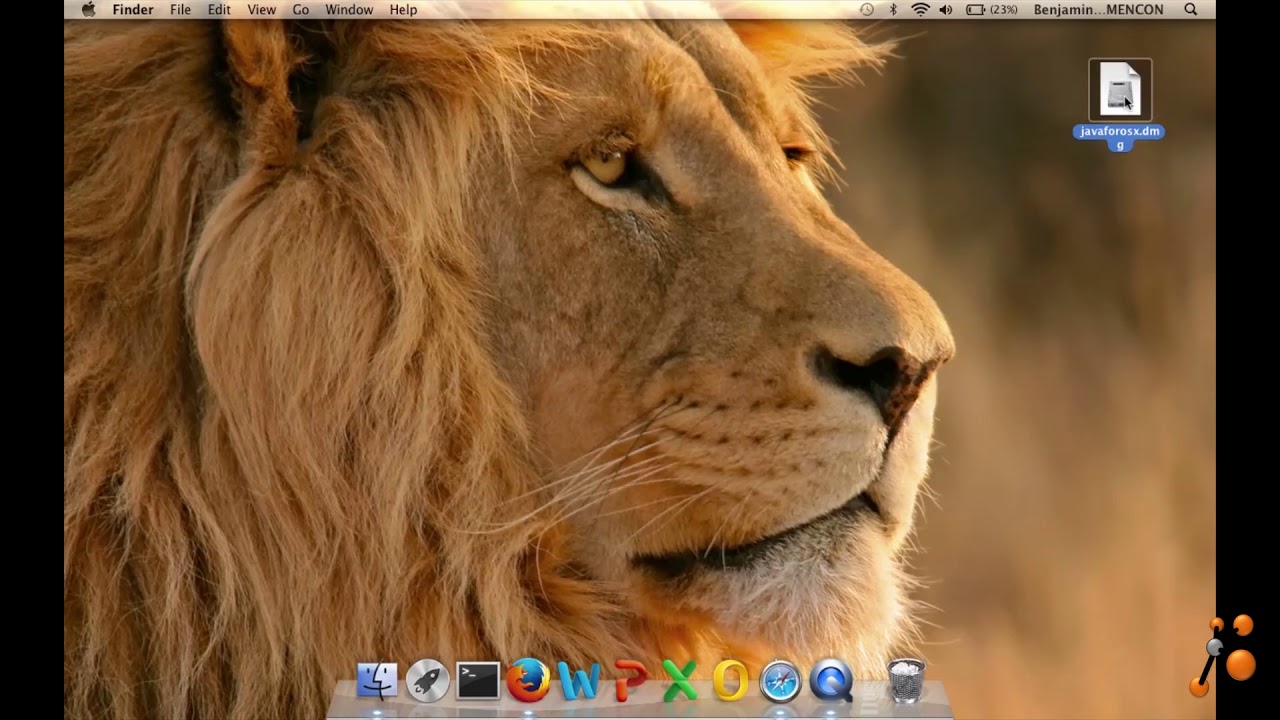
2. From either the Downloads window of the browser, or from the file browser, double click the .dmg file to launch it.
3. A Finder window appears containing an icon of an open box and the name of the .pkg file Double click the package icon to launch the Install app.
4. The Install app displays the Introduction window. Click Continue.
4a. Note that, in some cases, a Destination Select window appears. This is a bug, as there is only one option available. If you see this window, select Install for all users of this computer to enable the continue button. Click Continue.
Free Java Download For Mac
5. The Installation Type window appears. Click Install.
6. A window appears which says 'Installer is trying to install new software. Type your password to allow this.' Enter the Administrator login and password and click Install Software.
7. The software is installed and a confirmation window appears. Click the ReadMe for more information about the installation.
After the software is installed, delete the dmg file if you want to save disk space.
Determining the Default Version of the JDK
A: If you have not yet installed Apple's Java Mac OS X 2012-006 update, then you are still using a version of Apple Java 6 that includes the plug-in and the Java Preferences app. See Note for Users of Macs that Include Apple Java 6 Plug-in.
Download Java For Mac Os X 10.6.8
There can be multiple JDKs installed on a system – as many as you wish.
When launching a Java application through the command line, the system uses the default JDK. It is possible for the version of the JRE to be different than the version of the JDK.

You can determine which version of the JDK is the default by typing java -version in a Terminal window. If the installed version is 7u6, you will see a string that includes the text 1.7.0_06. For example:
To run a different version of Java, either specify the full path, or use the java_home tool:
For more information, see the java_home(1) man page.
Uninstalling the JDK
To uninstall the JDK, you must have Administrator privileges and execute the remove command either as root or by using the sudo(8) tool.
Navigate to /Library/Java/JavaVirtualMachines and remove the directory whose name matches the following format:*
For example, to uninstall 7u6:
Do not attempt to uninstall Java by removing the Java tools from /usr/bin. This directory is part of the system software and any changes will be reset by Apple the next time you perform an update of the OS.
*The 7u4 and 7u5 releases were installed into a directory that does not follow this format. To uninstall 7u4 or 7u5, remove the 1.7.0.jdk directory from the same location.
With Oracle’s Java 8, there’s been some confusion as to whether Java 8 runs on Mac OS X 10.7.5. This issue was lent additional urgency in the wake of Oracle’s announcement that they will begin auto-updating Java 7 users to Java 8 starting in January 2015.
The root of the confusion lies in the fact that Oracle has listed two different sets of system requirements on their website for Macs running Java 8 on Mac OS X.
The first set is available via Oracle’s general Java system requirements page. This page states that Java 8 requires the following:
- Intel-based Mac running Mac OS X 10.8.3+, 10.9+
- Administrator privileges for installation
- 64-bit browser
The second set is available via the Java download page for Mac OS X. The system requirements linked from the download page state that Oracle’s Java requires the following:
- Intel-based Mac running Mac OS X 10.7.3 (Lion) or later.
- Administrator privileges for installation
- 64-bit browser

In short, the question of Java 8 support for 10.7.x depended on which system requirement page was correct. For more details, see below the jump.
Based on my testing, it appears that the current version of Java 8 (Java 8 Update 25) installs on Mac OS X 10.7.5 without issues.
Following installation, I tested on a 10.7.5 Mac against the following sites:
My work’s Juniper VPN (which uses a signed Java applet)
Oracle’s Java Test page: https://www.java.com/en/download/help/testvm.xml
Java Tester’s Java Version page: http://javatester.org/version.html
In all three cases, the Java applets on those sites launched and worked without issue using Java 8 Update 25 (though the javatester.org applet needed to be whitelisted.)